

Golden Oyster (Pleurotus Citrinopileatus) Long Term Storage Slant / Vial
Golden Oyster – (Pleurotus citrinopileatus)
We offer fresh-made Agar plates, Slants, Liquid Cultures, and Spore Syringes, all prepared to order in a sterile environment. Please allow 3–5 business days for processing before shipment.
Golden Oyster Mushroom: Sunshine on the Plate
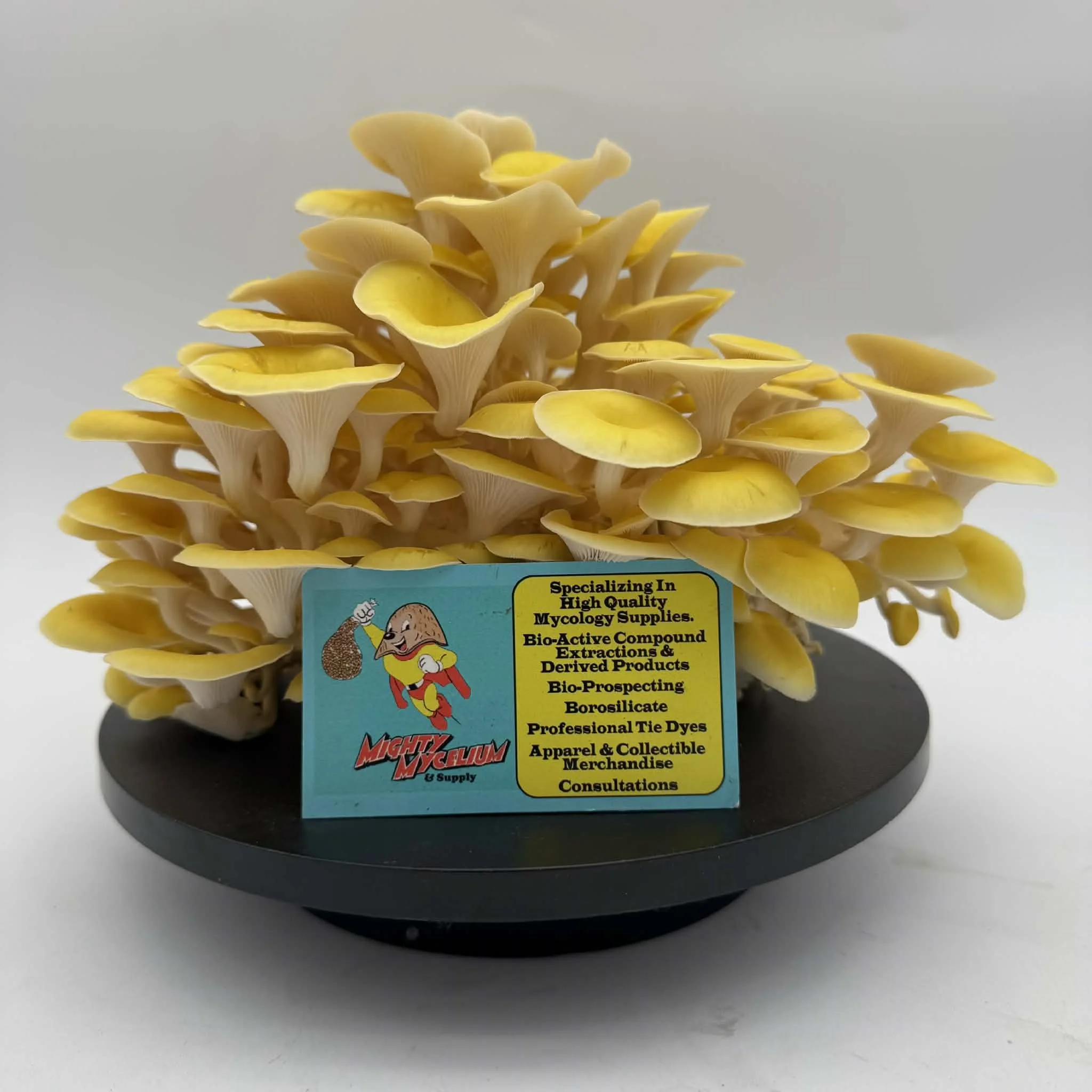
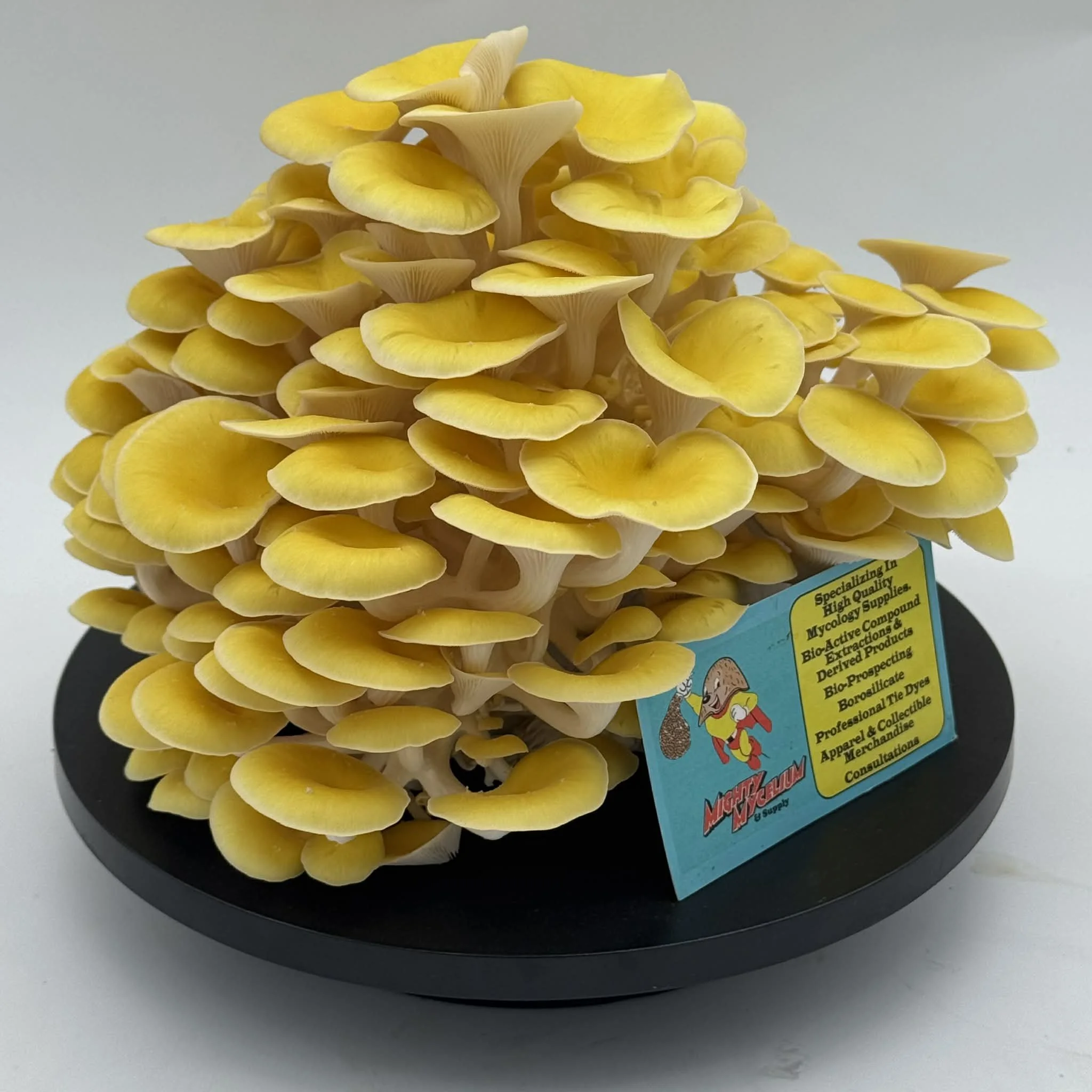
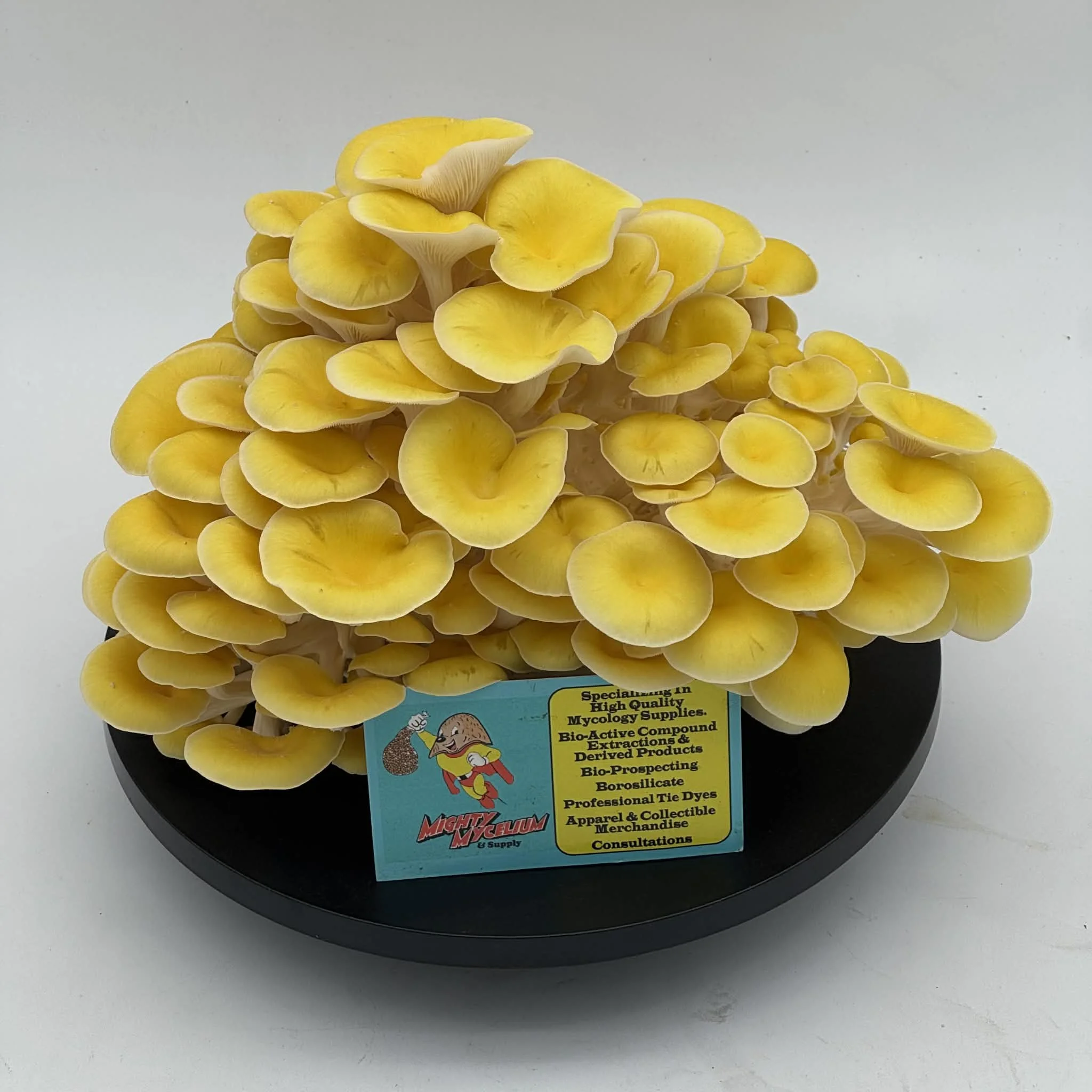
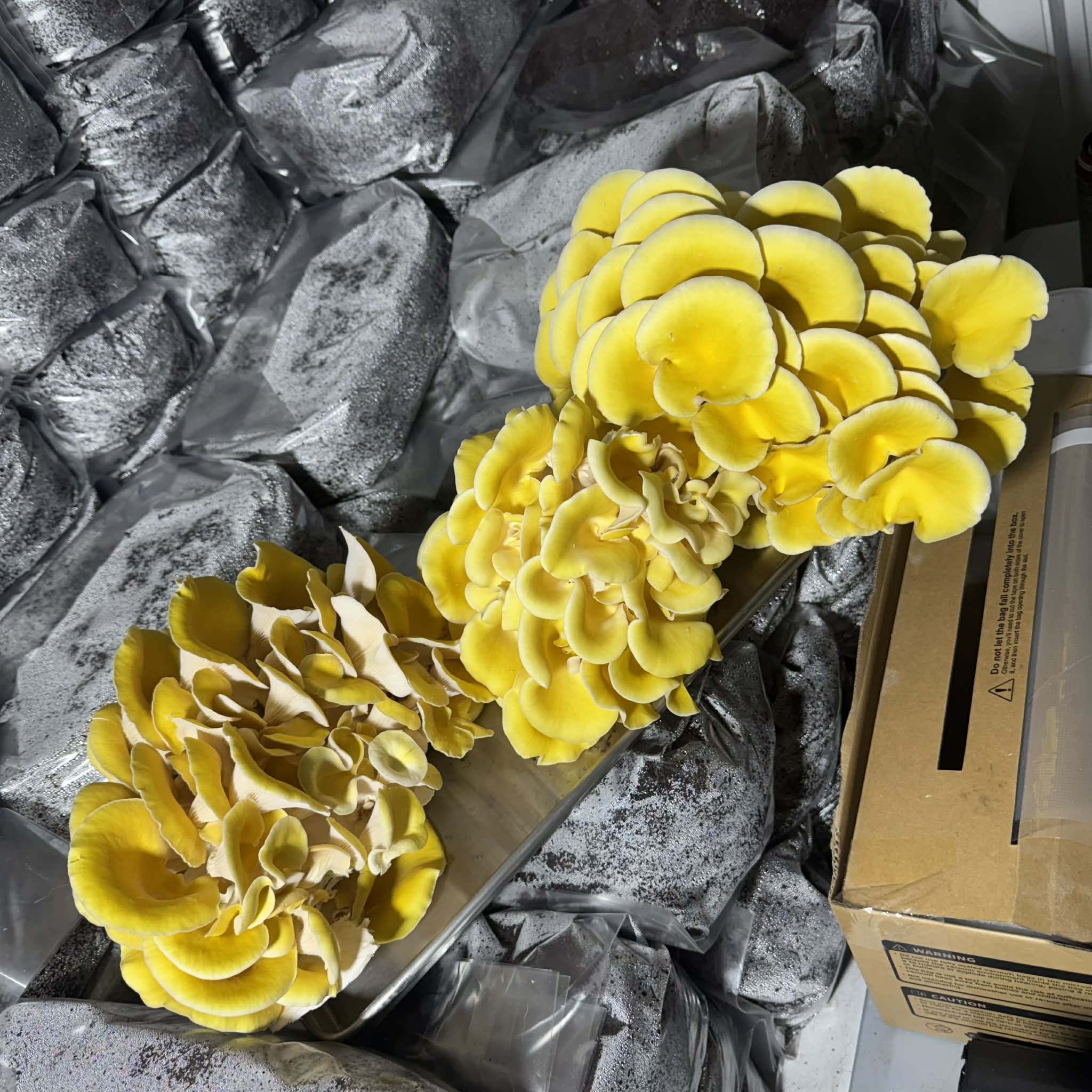
The Golden Oyster (Pleurotus citrinopileatus) is one of the most visually stunning gourmet mushrooms. Known for its bright lemon-yellow caps and elegant clustered growth, it adds a pop of color that captivates farmers’ market customers and chefs alike. Fast-fruiting and highly productive, Golden Oysters colonize grain and blocks quickly, then burst into cascading bouquets of golden ruffles.
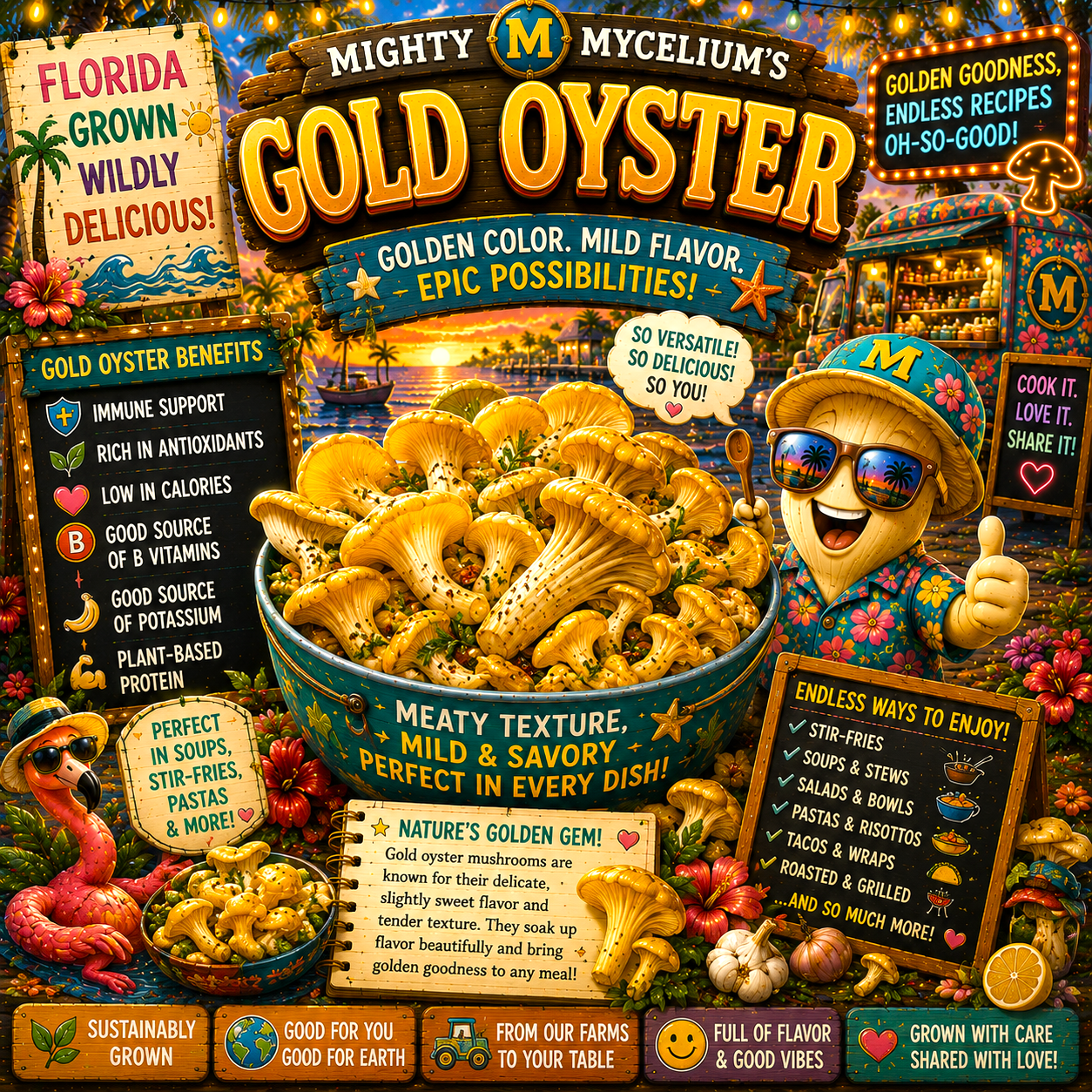
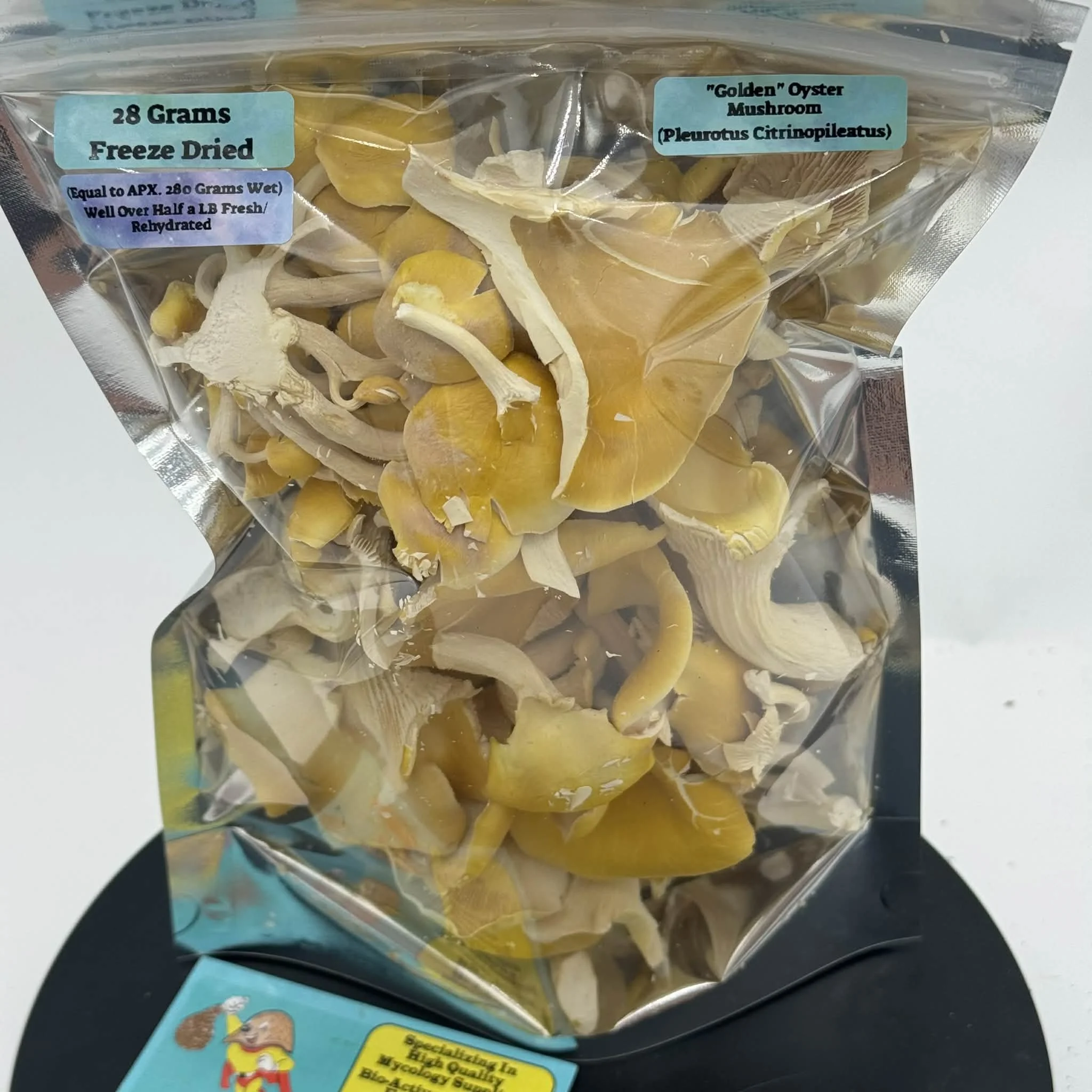
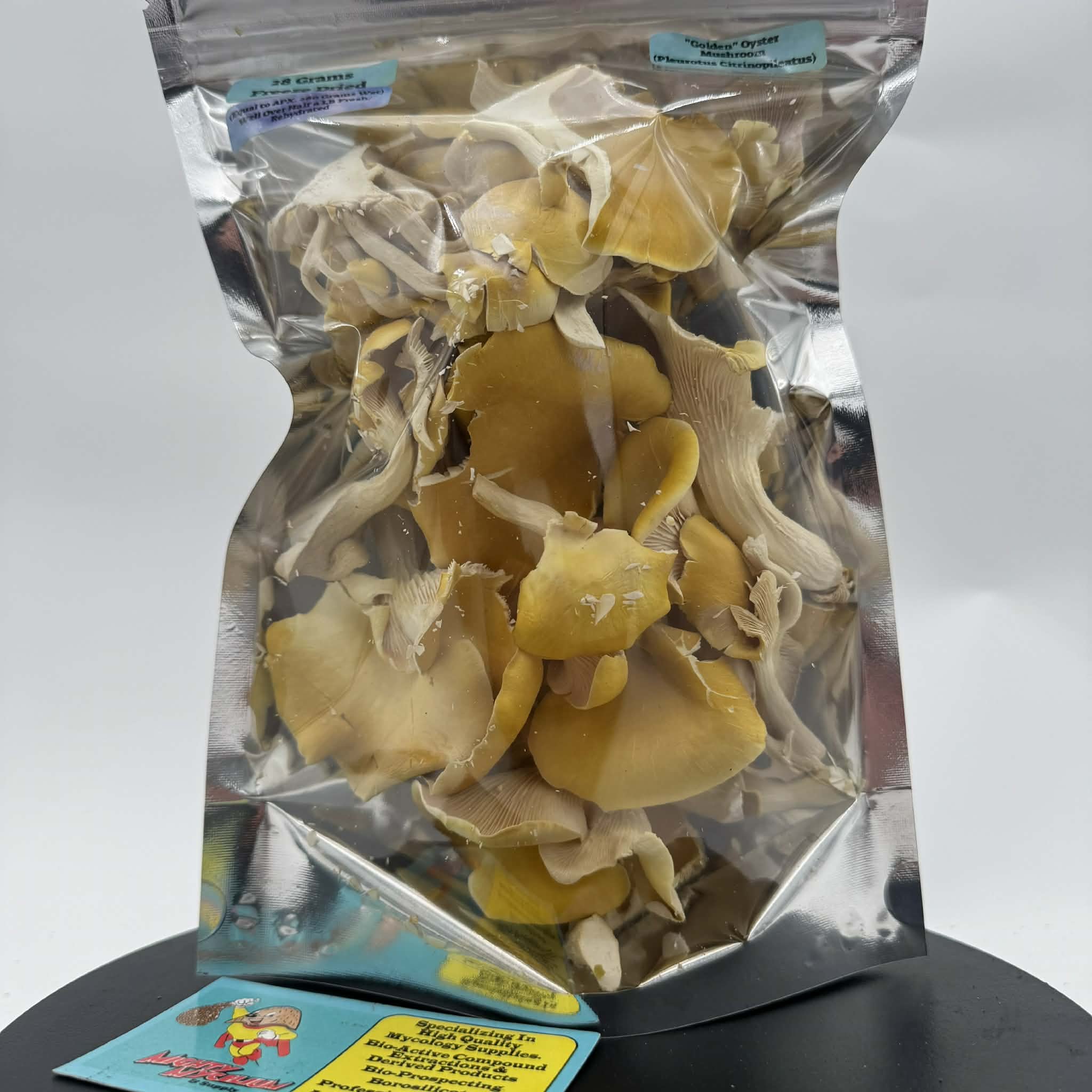
In the kitchen, Golden Oysters have a delicate, nutty flavor that intensifies when lightly sautéed. Their thin flesh cooks quickly, making them ideal for stir-fries, pasta, and dishes where color and lightness shine. Like Pink Oysters, they are best eaten fresh, as their shelf life is short.
As always, produced with love and a touch of southern hospitality. 😉
We start with organically grown milo grain, expanded into hardwood sawdust or straw blends for fast colonization and vibrant fruiting.
🍄 Golden Oyster: Comprehensive Profile
Overview
Common Name: Golden Oyster
Scientific Name: Pleurotus citrinopileatus
Family: Pleurotaceae
Ecological Role: Saprotroph (wood decomposer)
Habitat: Hardwood logs and stumps in subtropical climates
Distribution: Native to East Asia; cultivated worldwide
🔬 Taxonomy
RankClassificationDomainEukaryotaKingdomFungiPhylumBasidiomycotaClassAgaricomycetesOrderAgaricalesFamilyPleurotaceaeGenusPleurotusSpeciesP. citrinopileatus
🧬 Morphological Characteristics
Fruiting Body:
Cap: Bright lemon-yellow, thin, funnel-shaped; 2–6 cm across
Stem: Slender, white to pale yellow; clustered tightly
Gills: Decurrent, cream-colored
Flesh: Thin, fragile, cooks down quickly
Spore Print: White to pale lilac-gray
Flavor/Texture:
Light, nutty flavor
Thin flesh, crisp when lightly cooked
🌍 Ecology & Distribution
Native to subtropical Asia (China, Japan)
Grows on dead or dying hardwoods
Widely cultivated on sawdust, straw, coffee grounds, and agricultural byproducts
🌿 Distinguishing Features
vs Pink Oyster (P. djamor): Golden fruits yellow instead of pink, with a lighter, nuttier taste
vs Pearl Oyster (P. ostreatus): Golden is more delicate, with thinner flesh and shorter shelf life
vs Blue Oyster (P. ostreatus var. columbinus): Golden fruits in warmer temps and shows bright coloration
⚕️ Culinary & Nutritional Potential
Culinary:
Mild, nutty, delicate flavor
Best pan-seared or sautéed — overcooking can make them mushy
Brilliant garnish or centerpiece mushroom
Nutritional/Medicinal:
Good source of protein, fiber, B-vitamins, potassium
Contains antioxidants and β-glucans with immune-support potential
Nutritional profile similar to other oyster mushrooms
⚠️ Toxicity / Edibility
Fully edible; no toxicity known
Fragile and short shelf life (2–3 days refrigerated)
📸 Cultivation Notes
Substrate: Straw, hardwood sawdust, soy hull mixes, coffee grounds
Spawn Run: 7–10 days on grain; 2–3 weeks on sawdust blocks
Fruiting Conditions:
Temp: 70–85°F (21–29°C) optimal
Humidity: 85–95%
Fresh Air: Requires strong FAE to prevent long stems
Yield: High, but delicate clusters may be damaged during harvest/transport
📚 Historical & Cultural Notes
Long cultivated in China and Japan as a summer mushroom
Popular in farmers’ markets for visual appeal, often sold in mixed “rainbow oyster” bundles
Gaining traction among chefs for plating aesthetics
✅ Summary: Key Points on Golden Oyster
Brilliant yellow caps with clustered bouquets
Fast-growing, warm-fruiting oyster strain
Mild, nutty, delicate flavor — best fresh
Very short shelf life; fragile during handling
Highly marketable for chefs and farmers’ markets
Golden Oyster – (Pleurotus citrinopileatus)
We offer fresh-made Agar plates, Slants, Liquid Cultures, and Spore Syringes, all prepared to order in a sterile environment. Please allow 3–5 business days for processing before shipment.
Golden Oyster Mushroom: Sunshine on the Plate
The Golden Oyster (Pleurotus citrinopileatus) is one of the most visually stunning gourmet mushrooms. Known for its bright lemon-yellow caps and elegant clustered growth, it adds a pop of color that captivates farmers’ market customers and chefs alike. Fast-fruiting and highly productive, Golden Oysters colonize grain and blocks quickly, then burst into cascading bouquets of golden ruffles.
In the kitchen, Golden Oysters have a delicate, nutty flavor that intensifies when lightly sautéed. Their thin flesh cooks quickly, making them ideal for stir-fries, pasta, and dishes where color and lightness shine. Like Pink Oysters, they are best eaten fresh, as their shelf life is short.
As always, produced with love and a touch of southern hospitality. 😉
We start with organically grown milo grain, expanded into hardwood sawdust or straw blends for fast colonization and vibrant fruiting.
🍄 Golden Oyster: Comprehensive Profile
Overview
Common Name: Golden Oyster
Scientific Name: Pleurotus citrinopileatus
Family: Pleurotaceae
Ecological Role: Saprotroph (wood decomposer)
Habitat: Hardwood logs and stumps in subtropical climates
Distribution: Native to East Asia; cultivated worldwide
🔬 Taxonomy
RankClassificationDomainEukaryotaKingdomFungiPhylumBasidiomycotaClassAgaricomycetesOrderAgaricalesFamilyPleurotaceaeGenusPleurotusSpeciesP. citrinopileatus
🧬 Morphological Characteristics
Fruiting Body:
Cap: Bright lemon-yellow, thin, funnel-shaped; 2–6 cm across
Stem: Slender, white to pale yellow; clustered tightly
Gills: Decurrent, cream-colored
Flesh: Thin, fragile, cooks down quickly
Spore Print: White to pale lilac-gray
Flavor/Texture:
Light, nutty flavor
Thin flesh, crisp when lightly cooked
🌍 Ecology & Distribution
Native to subtropical Asia (China, Japan)
Grows on dead or dying hardwoods
Widely cultivated on sawdust, straw, coffee grounds, and agricultural byproducts
🌿 Distinguishing Features
vs Pink Oyster (P. djamor): Golden fruits yellow instead of pink, with a lighter, nuttier taste
vs Pearl Oyster (P. ostreatus): Golden is more delicate, with thinner flesh and shorter shelf life
vs Blue Oyster (P. ostreatus var. columbinus): Golden fruits in warmer temps and shows bright coloration
⚕️ Culinary & Nutritional Potential
Culinary:
Mild, nutty, delicate flavor
Best pan-seared or sautéed — overcooking can make them mushy
Brilliant garnish or centerpiece mushroom
Nutritional/Medicinal:
Good source of protein, fiber, B-vitamins, potassium
Contains antioxidants and β-glucans with immune-support potential
Nutritional profile similar to other oyster mushrooms
⚠️ Toxicity / Edibility
Fully edible; no toxicity known
Fragile and short shelf life (2–3 days refrigerated)
📸 Cultivation Notes
Substrate: Straw, hardwood sawdust, soy hull mixes, coffee grounds
Spawn Run: 7–10 days on grain; 2–3 weeks on sawdust blocks
Fruiting Conditions:
Temp: 70–85°F (21–29°C) optimal
Humidity: 85–95%
Fresh Air: Requires strong FAE to prevent long stems
Yield: High, but delicate clusters may be damaged during harvest/transport
📚 Historical & Cultural Notes
Long cultivated in China and Japan as a summer mushroom
Popular in farmers’ markets for visual appeal, often sold in mixed “rainbow oyster” bundles
Gaining traction among chefs for plating aesthetics
✅ Summary: Key Points on Golden Oyster
Brilliant yellow caps with clustered bouquets
Fast-growing, warm-fruiting oyster strain
Mild, nutty, delicate flavor — best fresh
Very short shelf life; fragile during handling
Highly marketable for chefs and farmers’ markets