

Nameko (Pholiota Nameko" Long Term Storage Slant / Vial & Agar Plate
Nameko – (Pholiota nameko)
We offer fresh-made Agar plates, Slants, Liquid Cultures, and Spore Syringes, all prepared to order in a sterile environment. Please allow 3–5 business days for processing before shipment.
Nameko Mushroom: Japan’s Beloved Soup Mushroom
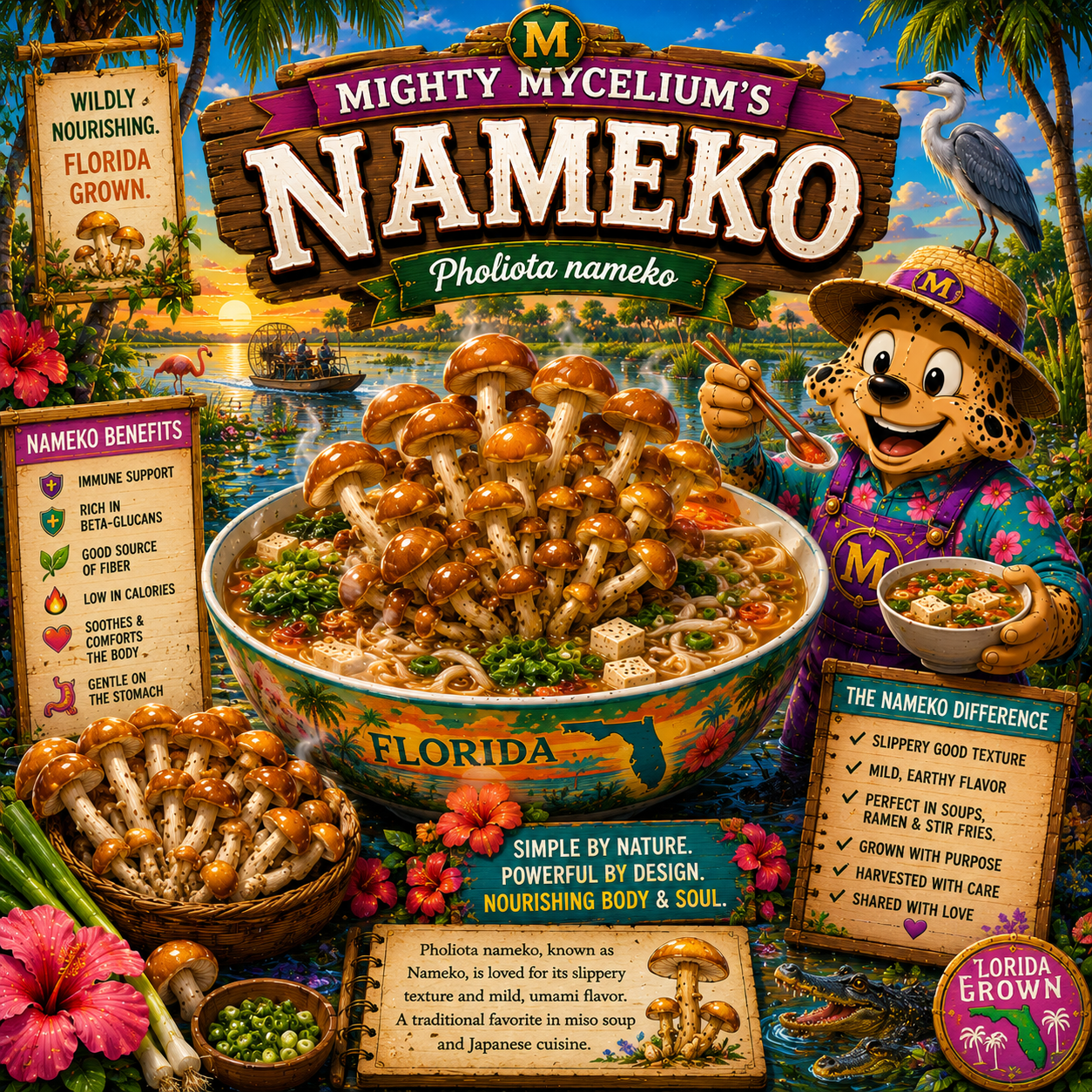
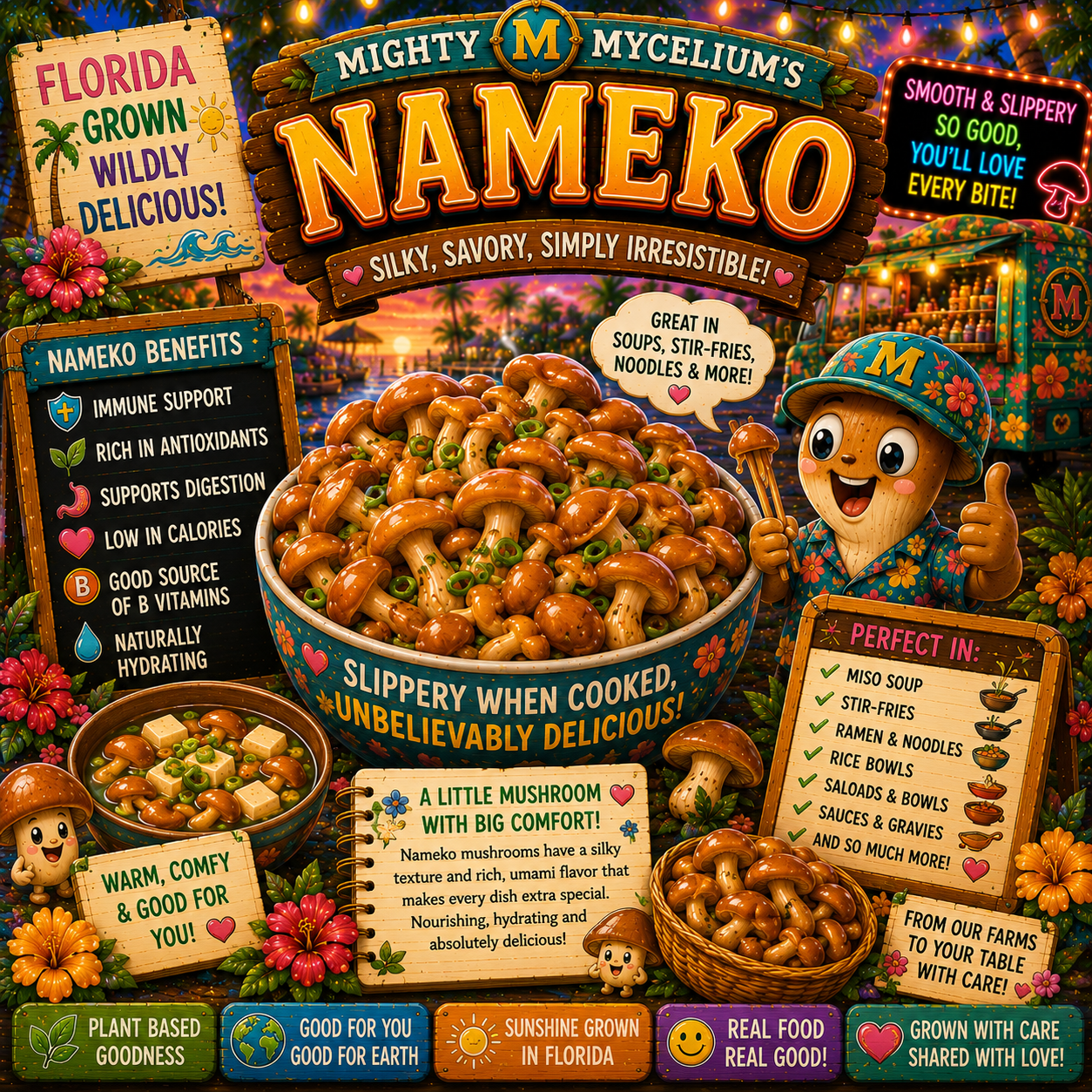
Nameko (Pholiota nameko) is one of the most popular cultivated mushrooms in Japan and an essential ingredient in traditional miso soups and hot pots. Known for its amber-brown caps covered in a natural gelatinous coating, it adds both flavor and a distinctive silky texture to dishes.
In the kitchen, Nameko’s slippery cap surface thickens soups and sauces naturally, while its nutty, slightly fruity flavor deepens broths. Cultivators value Nameko because it fruits in cool temperatures, forms dense clusters, and has strong market demand in Asian cuisine.
As always, produced with love and a touch of southern hospitality. 😉
Our spawn begins with organically grown milo grain, expanded into hardwood sawdust blocks with bran supplementation, supporting reliable flushes of this unique culinary mushroom.
🍄 Nameko: Comprehensive Profile
Overview
Common Name: Nameko Mushroom
Scientific Name: Pholiota nameko
Family: Strophariaceae
Ecological Role: Saprotroph (wood decomposer)
Habitat: Dead/dying hardwoods (especially beech, oak)
Distribution: Native to Japan and East Asia; cultivated worldwide
🔬 Taxonomy
RankClassificationDomainEukaryotaKingdomFungiPhylumBasidiomycotaClassAgaricomycetesOrderAgaricalesFamilyStrophariaceaeGenusPholiotaSpeciesP. nameko
🧬 Morphological Characteristics
Fruiting Body:
Cap: Amber-brown to golden; 2–6 cm; covered with natural gelatinous layer (slimy when fresh)
Stem: Slender, pale to golden brown; fibrous texture
Gills: Pale, turning darker brown with maturity
Spore Print: Brown
Growth Habit: Dense clusters on logs or blocks
Flavor/Texture:
Nutty, slightly fruity taste
Slippery caps create a silky mouthfeel in soups
🌍 Ecology & Distribution
Native to Japan, China, and parts of East Asia
Widely cultivated in Japan — one of the top three mushrooms grown there (with Shiitake & Enoki)
Naturally occurs on decayed hardwood stumps, especially beech
🌿 Distinguishing Features
vs Chestnut (Pholiota adiposa): Nameko has a gelatinous cap; Chestnut is dry and scaly
vs Shiitake (Lentinula edodes): Shiitake is larger, meatier, lacks the slippery coating
vs Enoki (Flammulina velutipes): Nameko has amber gelatinous caps; Enoki is long, white, needle-like
⚕️ Culinary & Nutritional Potential
Culinary:
Most famous in miso soup, nabemono (hot pots), stir-fries, and sauces
Gelatinous cap adds natural thickening agent
Holds up well when simmered; pairs with soy, miso, garlic, and ginger
Nutritional/Medicinal:
Rich in fiber, protein, B vitamins, copper, and potassium
Contains antioxidants and polysaccharides with potential immune-support benefits
Low calorie; considered both a gourmet and functional mushroom
⚠️ Toxicity / Edibility
Fully edible and highly prized
Slippery texture is desirable in Japanese cuisine but may surprise Western consumers unfamiliar with it
📸 Cultivation Notes
Substrate: Hardwood sawdust with bran supplementation; can also fruit from logs
Spawn Run: 3–5 weeks on grain; 5–8 weeks on blocks
Fruiting Conditions:
Temp: 50–65°F (10–18°C) ideal
Humidity: 90–95%
Fresh Air: Needs moderate FAE; too much dries the gelatinous coating
Yield: High, with multiple flushes
Shelf Life: 5–7 days refrigerated; gelatinous surface helps retain moisture
📚 Historical & Cultural Notes
Cultivated in Japan since at least the early 20th century
Still one of the most popular mushrooms in Japanese markets
Essential ingredient in soups and stews, where its slippery caps define texture
✅ Summary: Key Points on Nameko
Amber-brown caps with natural gelatinous coating
Essential in Japanese miso soup and hot pots
Fruits in cool temps; reliable high yields
Nutty, slightly fruity flavor with silky mouthfeel
Among Japan’s top cultivated mushrooms alongside Shiitake and Enoki
Nameko – (Pholiota nameko)
We offer fresh-made Agar plates, Slants, Liquid Cultures, and Spore Syringes, all prepared to order in a sterile environment. Please allow 3–5 business days for processing before shipment.
Nameko Mushroom: Japan’s Beloved Soup Mushroom
Nameko (Pholiota nameko) is one of the most popular cultivated mushrooms in Japan and an essential ingredient in traditional miso soups and hot pots. Known for its amber-brown caps covered in a natural gelatinous coating, it adds both flavor and a distinctive silky texture to dishes.
In the kitchen, Nameko’s slippery cap surface thickens soups and sauces naturally, while its nutty, slightly fruity flavor deepens broths. Cultivators value Nameko because it fruits in cool temperatures, forms dense clusters, and has strong market demand in Asian cuisine.
As always, produced with love and a touch of southern hospitality. 😉
Our spawn begins with organically grown milo grain, expanded into hardwood sawdust blocks with bran supplementation, supporting reliable flushes of this unique culinary mushroom.
🍄 Nameko: Comprehensive Profile
Overview
Common Name: Nameko Mushroom
Scientific Name: Pholiota nameko
Family: Strophariaceae
Ecological Role: Saprotroph (wood decomposer)
Habitat: Dead/dying hardwoods (especially beech, oak)
Distribution: Native to Japan and East Asia; cultivated worldwide
🔬 Taxonomy
RankClassificationDomainEukaryotaKingdomFungiPhylumBasidiomycotaClassAgaricomycetesOrderAgaricalesFamilyStrophariaceaeGenusPholiotaSpeciesP. nameko
🧬 Morphological Characteristics
Fruiting Body:
Cap: Amber-brown to golden; 2–6 cm; covered with natural gelatinous layer (slimy when fresh)
Stem: Slender, pale to golden brown; fibrous texture
Gills: Pale, turning darker brown with maturity
Spore Print: Brown
Growth Habit: Dense clusters on logs or blocks
Flavor/Texture:
Nutty, slightly fruity taste
Slippery caps create a silky mouthfeel in soups
🌍 Ecology & Distribution
Native to Japan, China, and parts of East Asia
Widely cultivated in Japan — one of the top three mushrooms grown there (with Shiitake & Enoki)
Naturally occurs on decayed hardwood stumps, especially beech
🌿 Distinguishing Features
vs Chestnut (Pholiota adiposa): Nameko has a gelatinous cap; Chestnut is dry and scaly
vs Shiitake (Lentinula edodes): Shiitake is larger, meatier, lacks the slippery coating
vs Enoki (Flammulina velutipes): Nameko has amber gelatinous caps; Enoki is long, white, needle-like
⚕️ Culinary & Nutritional Potential
Culinary:
Most famous in miso soup, nabemono (hot pots), stir-fries, and sauces
Gelatinous cap adds natural thickening agent
Holds up well when simmered; pairs with soy, miso, garlic, and ginger
Nutritional/Medicinal:
Rich in fiber, protein, B vitamins, copper, and potassium
Contains antioxidants and polysaccharides with potential immune-support benefits
Low calorie; considered both a gourmet and functional mushroom
⚠️ Toxicity / Edibility
Fully edible and highly prized
Slippery texture is desirable in Japanese cuisine but may surprise Western consumers unfamiliar with it
📸 Cultivation Notes
Substrate: Hardwood sawdust with bran supplementation; can also fruit from logs
Spawn Run: 3–5 weeks on grain; 5–8 weeks on blocks
Fruiting Conditions:
Temp: 50–65°F (10–18°C) ideal
Humidity: 90–95%
Fresh Air: Needs moderate FAE; too much dries the gelatinous coating
Yield: High, with multiple flushes
Shelf Life: 5–7 days refrigerated; gelatinous surface helps retain moisture
📚 Historical & Cultural Notes
Cultivated in Japan since at least the early 20th century
Still one of the most popular mushrooms in Japanese markets
Essential ingredient in soups and stews, where its slippery caps define texture
✅ Summary: Key Points on Nameko
Amber-brown caps with natural gelatinous coating
Essential in Japanese miso soup and hot pots
Fruits in cool temps; reliable high yields
Nutty, slightly fruity flavor with silky mouthfeel
Among Japan’s top cultivated mushrooms alongside Shiitake and Enoki